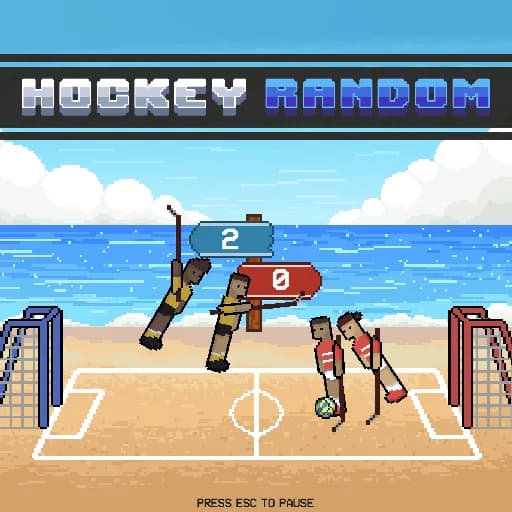
One Keyboard, Two Rivals: Hockey Random's Two-Player Mode
August 30, 2026 · MurderMafia.net Editorial Team · 4 min read
No game survives contact with a second player unchanged. Hockey Random does not even try. It is one button per team. Two ragdoll players per side. A puck with opinions. A rink that changes every round. On paper it is hockey. In practice it is a laugh contest with a score. The 2 Player mode is where the game does its best work. Two people. One keyboard. W against the Up Arrow. Here is how that works, why random keeps it fair, and how to win first-to-five without losing the friendship.
The Shared Keyboard Is the Arena
Two players on one keyboard is the most honest arena in gaming. No hardware excuses. No handedness complaints. One key each. Player 1 presses W. Player 2 presses the Up Arrow. Each press makes your team leap and swing at the puck. The keyboard is the rink. The space between keys is the ice. Matches start in seconds. Rematches are instant. The setup is small enough to fit between classes or meetings. Two people. One keyboard. No referees. No mercy.
Why Random Makes It Fair
The randomness is not a bug. It is the fairness tool. Every round changes the rink and the player builds. The puck acts differently. Sometimes snow. Sometimes beach. Nobody can master the conditions. The player who won the last point has no edge on the next one. The next one is a new game. That keeps two-player matches fun past the first blowout. Random conditions keep resetting the power. The skill is adapting to the round, not memorizing what worked.
The Puck Has No Loyalty
The puck is a free agent. It bounces off sticks, walls, players, and the odd physics miracle. It goes where the math takes it. Not where you want. Accept that early and you save a lot of blame. The point is not to control the puck. It is to be nearby when it arrives. Place your presses around where the puck is going. Not where it is. Goals start to find you. The best players do not chase the puck. They let it come to them. They are already swinging when it does.
Timing Beats Flailing
One-button controls tempt everyone into one mistake. Press all the time and hope physics sorts it out. Wild flailing rarely scores. The puck does not care how loud the swing was. It cares if the stick was there. The timing that works waits. Let the puck come to the pack. Press as the players reach it. Let the swing meet the puck. One timed press beats five desperate ones. The players who learn that first win the rematches.
First to Five: Match Psychology
The match ends at five goals. The psychology of the run matters more than any goal. Early leads in a chaos game are not safe. Random can erase a three-goal cushion in one round. Keep treating every point like a fresh face-off. The player who tilts after a bad bounce gives the game away. The player who treats each bounce as the deal stays in until the buzzer. It is the same table skill as every game here. The house does not care about your bad beat. Neither does the next round.
Solo Is a Warm-Up, Not the Show
The 1 Player mode against the CPU is a fine way to learn timing. The mobile tap version plays like the desktop one. One input. Everything else is physics. But the game is built for the second player. The CPU cannot laugh. It cannot blame the keyboard. It cannot celebrate a beach own goal. It does not feel the shared chaos. Bring a friend to Hockey Random, put them on the Up Arrow, and settle it best-of-five. When the puck is done with you, Bowmasters runs the same pass-the-laptop duel, and Ragdoll Mega Dunk keeps the highlight reel going.