Tuck, Release, Land: The Hidden Timing of Ragdoll Flip
August 6, 2026 · MurderMafia.net Editorial Team · 4 min read
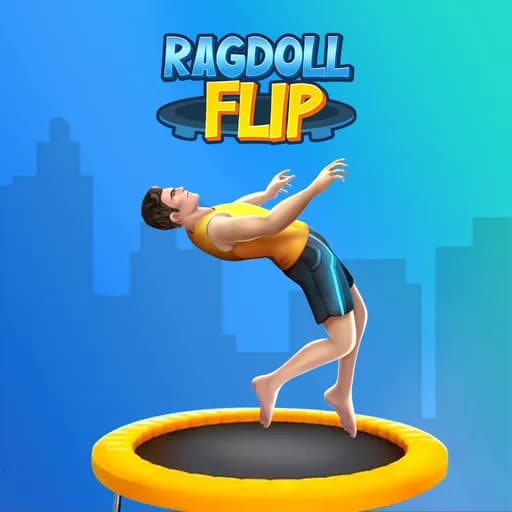
Ragdoll Flip looks like a physics joke with a gymnast attached. You charge a jump. You let go. A floppy body sails across the sky while you pray. But the joke hides a precise instrument. Underneath the wobble, Ragdoll Flip is a clock. The charge sets your power. The tuck sets your spin. The release sets your landing. Learn to read that clock and the crashes stop being random. They become corrections, one small adjustment at a time.
The Charge Sets Two Dials at Once
Hold the mouse button, or press and hold on a touchscreen. The gymnast bends its knees and charges. The longer you hold, the more power you store. Here is the part most players miss: the charge also feeds the spin. A long charge launches the body higher and faster. It also gives more rotation than the course expects. That is why a full-power jump so often sails past the platform and into the scenery. Power and rotation are one dial. You pay for both with the same finger. The first lesson of the game is that greed has a price. It is usually a backflip into a wall.
Tucking Is Your Only In-Flight Control
Once airborne, you have exactly one lever: the tuck. Hold again mid-flight and the gymnast curls into a ball. It rotates faster, like a skater pulling in their arms. Release and the body extends. The spin slows. The feet can line up with the platform. Every flip is a negotiation between those two states. The timing of the swap is the whole game. Tuck too early and you overshoot. Tuck too late and you arrive at the platform still spinning like a coin. The body has no other commands. One input, in the air, doing two jobs.
The Landing Window
Landings are judged by physics, not by a generous hitbox. The platform wants the feet. The body wants the floor. The moment to release your final tuck is earlier than your instincts suggest. The body needs a few frames to open out and settle before touchdown. Release mid-air to extend. Let the legs lead. A slow, controlled flip beats a fast, messy one every time. The game's own FAQ delivers the same lesson. The leaderboard enforces it. If you keep crashing short, you are not releasing too late. You are releasing too late to matter.
Reading the Course Like a Puzzle
Each course scatters landing platforms across an obstacle-filled stage. No two jumps behave alike. The trick is reading the stage before you leap. Where does the platform sit? How much height does it need? Will a wall eat an over-rotated flip? Treat every course like a puzzle with a known answer, not a gamble. The platform is the goal. The flight is just the route. When a jump fails, change one variable. Change charge length, tuck timing, or release height. Do not change everything at once. That discipline turns a flailing gymnast into a confident one. It also makes the physics feel fair instead of cruel.
Free Failures Are the Best Teacher
The game's great gift is that failure costs nothing. It entertains for free. A botched launch still produces a spectacular tumble. The restart is instant. Every crash is a cheap lesson in what the physics will and will not forgive. Over a session the pattern becomes clear. Over-rotation is the number one killer. Short charges and mistimed releases follow close behind.
- Overshooting the platform? Charge less, or open the body earlier.
- Landing short? Add power, not spin. Release the tuck sooner to flatten out.
- Spinning past the pad? Hold the tuck a heartbeat longer before the landing.
- Every crash is data. Change one thing per attempt.
Underneath the comedy sits a tight timing system from 1Games.io. The studio makes a string of quick-fire browser physics games. When the floppy chaos is what you love, Hockey Random turns the same physics into a sport. Ragdoll Mega Dunk puts it on a basketball court. The purest form of the skill lives right here: charge, tuck, release, land. One clean landing is worth a hundred crashes. Play Ragdoll Flip and chase one.